Culture Vannin Supports New Manx Poetry Collection
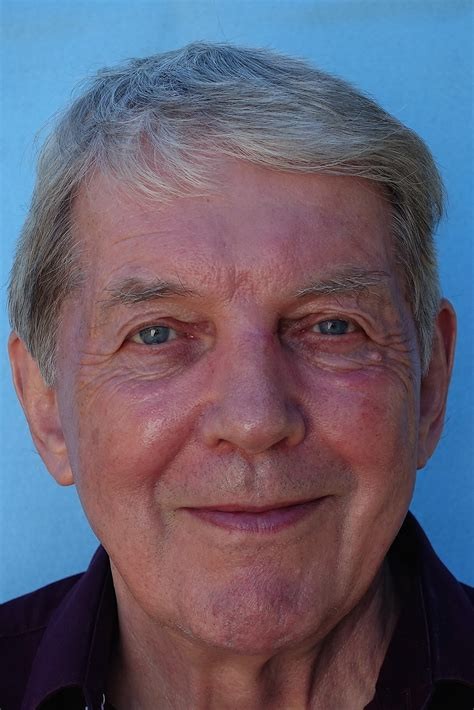
In our regular feature, authors from different walks of Manx life offer a personal perspective on My Biosphere. This month, marine biologist Dr Roger Pullin writes:
My love for the Island began with a field trip from Wolverhampton Grammar School in 1961, organised by my biology teacher, Bob Lister. We were billeted at King William’s College and studied marine life, mostly around Langness. I returned in 1963 with a team from Imperial College to test underwater ecological methods, hosted by the Port Erin Marine Laboratory (PEML). I realized how great it would be to live and work on the Island. In 1968, I applied for an Assistant Lectureship at the PEML. My interviewers’ main concern was that I could be happy living here. I convinced them rather easily and got the job.
1970 was European Conservation Year and the Manx Conservation Council (MCC) was formed as a contribution from the Island. We published a newsletter covering a wide range of conservation and development issues. In 1972, there was an awful plan to build an oil refinery on the Ayres, receiving crude oil and exporting refined products via single buoy moorings. This was a wake-up call for action and for something more than the MCC. The campaign against the oil refinery was successful. My “Song for the Terns” helped and is in the Manx National Songbook, thanks to Charles Guard. In 1973, William Cain taught us that the best way to conserve some precious Manx wildlife in perpetuity was to establish nature reserves, on lands owned and managed for that purpose. We formed the Manx Nature Conservation Trust, which became Manx Wildlife Trust (MWT).
In 1977, I helped to assess some oil spill damage in Hong Kong and decided to seek more opportunities to work in the tropics. From 1979 to 2000, I directed international research on aquaculture and aquatic biodiversity and genetic resources for the International Center for Living Aquatic Resources Management in Manila and then became a consultant to the Asian Development Bank, FAO and others. Throughout this long absence, I kept in touch with precious people and places on the Island through annual visits.
My most precious places include Cornaa and Santon Gorge. I resumed residence in 2018, serving again as an MWT Trustee and helping with the conservation and sustainable use of aquatic biodiversity.
My Island Biosphere and yours is a set of nested ecosystems. Ecosystems are like Russian dolls with porous boundaries. Our Island ecosystem contains aquatic ecosystems, including inland and coastal waters and wetlands, and terrestrial ecosystems, including uplands, urban areas and farms. All of these are nested ecosystems, containing ever smaller ones. The whole Island is within the Irish Sea marine ecosystem, which is within the North Atlantic and ultimately within all of Gaia.
Strengthening our UNESCO Biosphere status will require sustained efforts and eco-friendly investments, especially in saving energy, developing renewable energy sources, reducing our reliance on fossil fuels and locking up more carbon in our ecosystems. Our health and wealth depend on the health of the ecosystems that comprise our Biosphere.
Put simply, I love my Biosphere and would not live anywhere else.
Posted up on 20th April 2026