Biosphere in Action: Ramsey Hairpin Woodland Park
The Manx Blue Carbon Project has spent the last four years exploring how our seas capture and store carbon - and how protecting marine habitats can support climate action, biodiversity, and island communities. Rowan Henthorn tells us about an upcoming free event you can get involved in:
As we approach the end of the project, we’re bringing partners, community members, and supporters together to reflect on the work completed so far and share what we’ve learned.
You can join the project team and researchers for an evening of insights, interactive activities, and conversations about the Isle of Man’s blue carbon habitats - and the role they play in supporting our island community.
📅 Wednesday 25 March
⏰ 6:00–8:00pm
📍 Noa Bakehouse (opposite the Sea Terminal), Douglas Isle of Man
🔗This is a FREE Event, but please register your interest here.
But what is “Blue Carbon”?
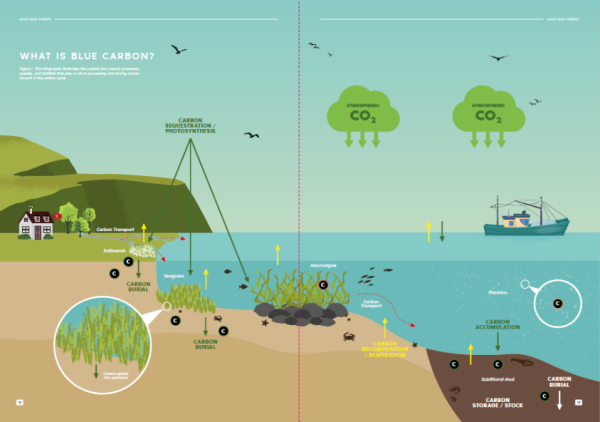
Blue carbon refers to the carbon absorbed and stored by marine ecosystems - such as seabed sediments, seagrass, saltmarsh, kelp forests, and shellfish reefs. These habitats capture carbon naturally, sometimes locking it away for centuries. When healthy, they also support fisheries, protect our coastline, and provide vital nursery grounds for marine life.
Why it matters for the Isle of Man
The Island’s waters store an estimated 500,000 tonnes of carbon in their top sediments - roughly the same as the annual carbon use of more than 226,000 UK homes.
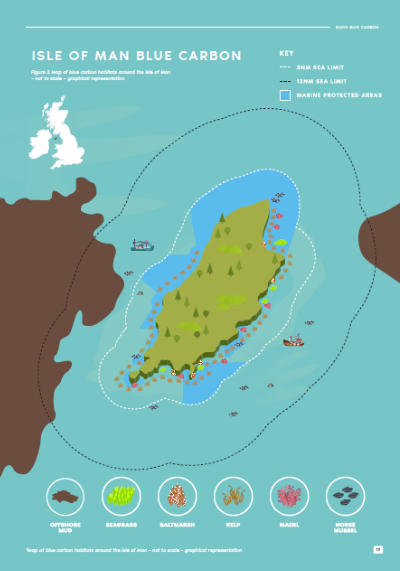
The Western Irish Sea Mud Belt (WISMB) is the largest store, naturally capturing the equivalent of around 10% of the Island’s yearly emissions, with about 7% buried long term. But research shows that bottom towed fishing gear effects the amount of carbon stored in this muddy habitat and work is ongoing to see if changes to the fishing practises in the mud belt could help support carbon capture and storage.
Other key habitats include:
- Seagrass meadows – rich nurseries for marine life, though storing modest amounts of carbon.
- Saltmarsh – small in area but extremely carbon dense.
- Kelp forests, maerl beds, horse mussel reefs – essential for biodiversity, with supporting roles in carbon retention.
Together, these habitats form an interconnected ‘marine carbon seascape’.
The Manx Blue Carbon Project
Led by the Department of Environment, Food and Agriculture, and delivered with partners at the National Oceanography Centre, Swansea University, and Bangor University, the project is part of the Island’s wider Net Zero ambitions.
What the project has done so far (2022–2025)
- Mapped and measured the Island’s blue carbon habitats.
- Investigated how human activity affects carbon storage.
- Begun pioneering research within the WISMB to understand how changing fishing practices could improve carbon storage and biodiversity. Results are expected in 2026.
- Launched innovative management trials, including new low impact creel fishing areas designed to support both fisheries and marine recovery.
Where the project is going next
- Eight high level recommendations guide future action, including:
- Continuing WISMB protection while research concludes.
- Working with communities and fishers to manage marine carbon hotspots.
- Integrating blue carbon into future planning and marine spatial policy.
- Monitoring key habitats to track change.
- Recognising the wider social, cultural, and economic benefits of healthy seas.
What to expect at the event
- Discover key findings from the Manx Blue Carbon Project
- Hear the DEFA Minister share reflections and the future direction for blue carbon on the Island
- Learn from one of our PhD researchers about the story behind their work - and what it means for our marine environment
- Explore interactive stations where you can get involved, ask questions, and learn more about our incredible underwater habitats
Everyone is welcome - we’d love you to join us and be part of the Island’s blue carbon story.
Register your interest here.